
24/7 Local HVAC Contractors Ready to Fix Your Air Conditioning Fast
When an air conditioning system stops working during extreme summer weather, finding reliable emergency AC repair near you can quickly become a priority. A failed cooling system can affect the comfort of a home, the working conditions of a business, the protection of temperature-sensitive equipment, and the day-to-day operation of a property. Fast Emergency AC Repair is designed as a nationwide directory that helps homeowners, renters, property managers, and business owners find local HVAC professionals who may be able to assist with urgent cooling problems.
HVAC emergencies can range from a system that suddenly stops producing cold air to electrical problems, frozen coils, refrigerant issues, blocked condensate drains, failed motors, compressor problems, unusual noises, or water leaks. The appropriate response depends on the equipment, the symptoms, the property, and the severity of the problem. A qualified local technician can inspect the system and determine what needs to be repaired, adjusted, cleaned, or replaced.
Our directory makes it easier to begin that search by organizing HVAC service providers by location and service area. Instead of searching through unrelated businesses, users can explore local options for air conditioning repair, emergency HVAC service, commercial cooling systems, ductless mini-splits, heat pumps, maintenance, replacement, and other related services.
Experiencing an AC Emergency?
If your air conditioner has stopped working during extreme temperatures, begin by locating a local HVAC professional that specifically offers emergency or after-hours service. Availability can vary significantly by city, contractor, season, and time of day, so confirm the provider’s current service hours and estimated arrival time before scheduling a visit.
If you notice smoke, sparking, a strong electrical burning smell, or another potentially dangerous electrical condition, turn the equipment off and avoid attempting repairs yourself. Water around electrical components should also be treated seriously. When safety is a concern, prioritize the safety of people and the property before troubleshooting the HVAC equipment.
Nationwide Emergency HVAC & Cooling Directory
Finding an HVAC contractor quickly can be difficult when an air conditioner fails unexpectedly. Search results may include general maintenance companies, installation specialists, plumbing businesses, appliance repair services, and contractors that do not operate in your particular area. A specialized directory can make the process easier by focusing attention on professionals associated with heating, ventilation, and air conditioning services.
Fast Emergency AC Repair provides a location-based directory intended to help users discover HVAC professionals throughout the United States. Depending on the provider, available services may include emergency air conditioning repair, central AC repair, ductless mini-split service, heat pump repair, commercial HVAC service, thermostat replacement, refrigerant diagnostics, condensate drain service, preventive maintenance, and complete system replacement.
Not every contractor offers every service. Equipment types, operating hours, service areas, licensing requirements, pricing, emergency availability, and technical experience can differ from one company to another. Users should therefore review the information available for each business and contact the contractor directly to confirm that the requested service is available.
What Can You Find in an HVAC Directory?
Depending on the location and available listings, users may find professionals offering residential AC repair, commercial HVAC service, emergency cooling repairs, heat pump service, ductless systems, rooftop equipment, preventive maintenance, HVAC installation, replacement, and other related services. The directory is intended to simplify the initial search so users can focus on businesses that match their location and service requirements.
Common HVAC Services You May Need
An HVAC emergency does not always mean that an entire air conditioning system has failed. Sometimes a relatively small component causes the system to stop cooling properly. In other cases, the problem may involve several components or an aging system that is approaching the end of its useful service life.
Emergency AC Repair
Urgent troubleshooting for air conditioners that stop cooling, develop serious mechanical problems, experience electrical faults, or show other symptoms requiring prompt professional attention.
Residential HVAC Repair
Service for central air conditioners, heat pumps, ductless mini-splits, thermostats, air handlers, condensate systems, and other equipment commonly found in homes.
Commercial HVAC Service
Repair and maintenance for commercial rooftop units, packaged systems, multi-zone equipment, larger cooling systems, and HVAC installations used by businesses.
AC Maintenance
Preventive inspections, filter checks, coil cleaning, condensate drain evaluation, electrical inspections, airflow testing, and other routine maintenance services.
Heat Pump Service
Diagnosis and maintenance for systems that provide both heating and cooling throughout the year.
Ductless Mini-Split Repair
Service for ductless systems used to cool individual rooms, additions, offices, apartments, and properties without traditional ductwork.
AC Replacement
Assistance with replacing older or severely damaged equipment when continued repair may no longer be practical or economical.
HVAC Diagnostics
Professional testing intended to identify the underlying cause of poor cooling, unusual noises, electrical problems, leaks, short cycling, or other system symptoms.
Residential vs. Commercial HVAC Systems
Choosing an HVAC professional with experience in the type of equipment installed at your property can make the repair process more efficient. Residential and commercial systems can differ considerably in size, controls, airflow requirements, accessibility, operating schedules, and maintenance requirements.
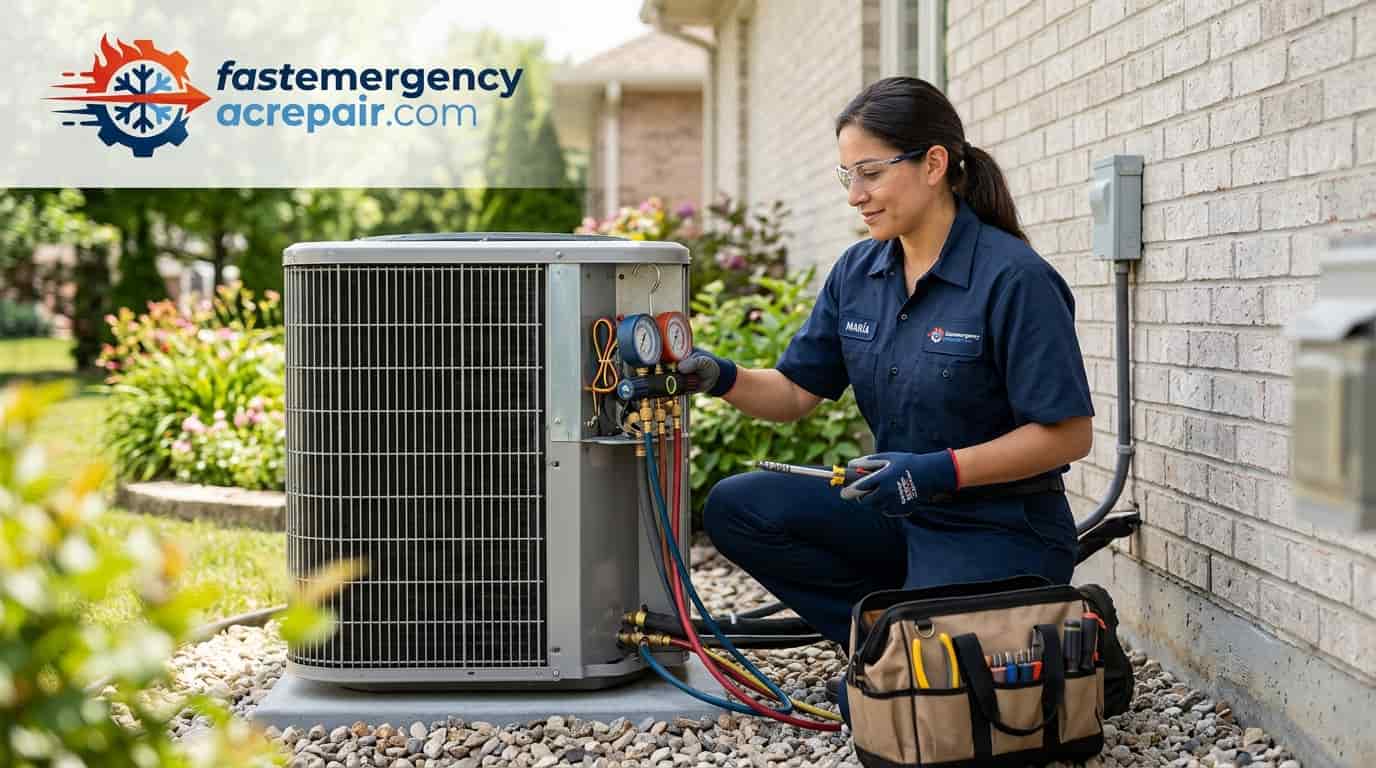
Residential systems are commonly installed in single-family homes, apartments, condominiums, and smaller properties. Central split systems remain widespread, while ductless mini-splits and heat pumps are also common in many parts of the country. Residential repairs may involve thermostats, capacitors, blower motors, evaporator coils, condenser fans, refrigerant systems, condensate drains, electrical controls, and airflow problems.
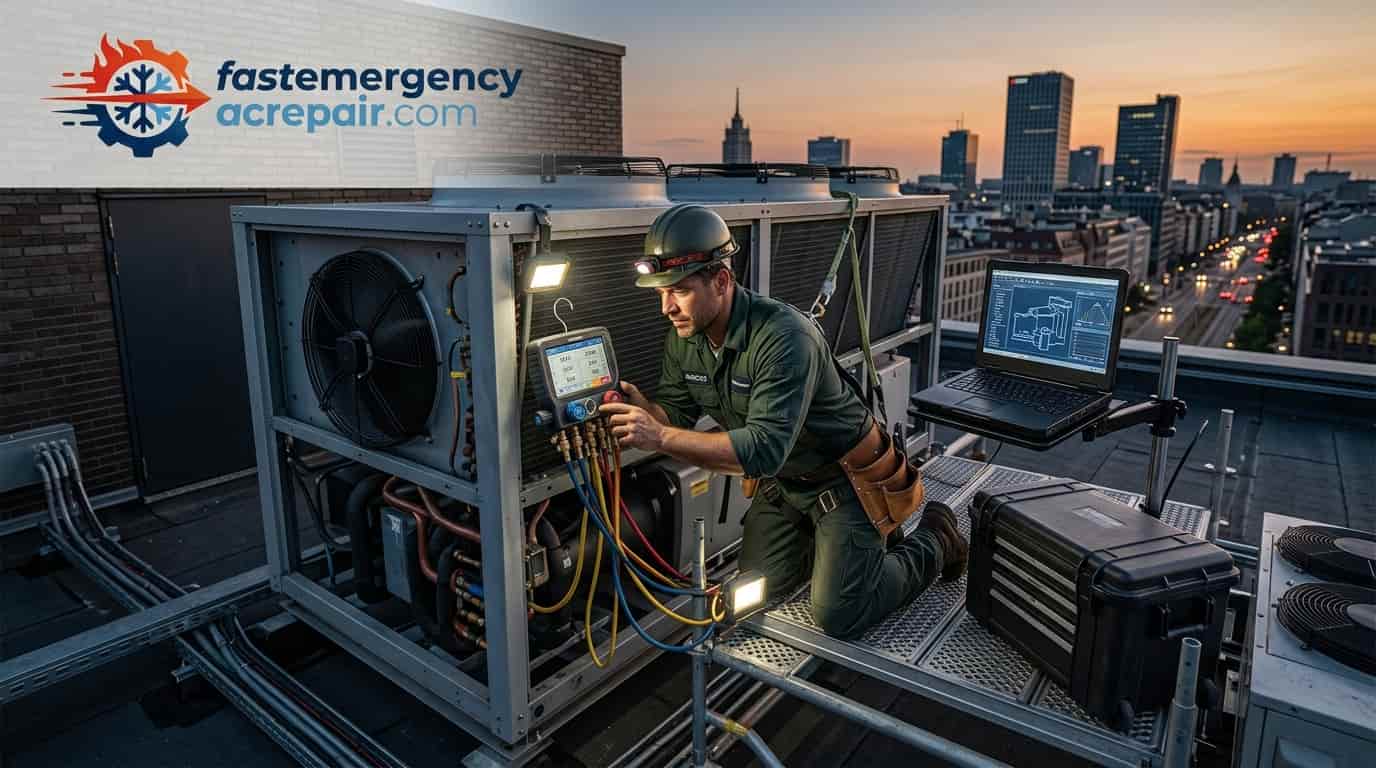
Commercial properties can require substantially larger or more complex equipment. Restaurants, offices, retail stores, warehouses, medical facilities, apartment buildings, and industrial properties may use packaged rooftop units, large split systems, VRF equipment, multi-zone systems, or specialized cooling installations.
Commercial HVAC failures can affect more than indoor comfort. A malfunctioning system may interfere with business operations, employee working conditions, customer experience, inventory, server rooms, manufacturing processes, or other temperature-sensitive areas. For this reason, businesses may require contractors that offer commercial emergency service and understand the equipment installed at the property.
Understanding the Main Types of Air Conditioning Systems
Knowing what type of HVAC system you have can help you communicate the problem more clearly when contacting a contractor. The following are some of the most common systems found in residential and commercial properties.
Central Air Conditioning: Central AC systems use an outdoor condenser and an indoor evaporator coil or air handler to cool air and distribute it through a network of ducts. Problems may involve refrigerant, electrical components, airflow, compressors, blower motors, coils, thermostats, or condensate drainage.
Ductless Mini-Split Systems: Mini-split systems use one or more indoor units connected to an outdoor condenser. They are useful when individual rooms or zones need independent temperature control or when installing conventional ductwork would be impractical.
Heat Pumps: Heat pumps can provide both heating and cooling. Because the same equipment operates in different modes throughout the year, problems can sometimes affect both seasonal functions. Proper diagnosis is important before replacing individual components.
Packaged HVAC Systems: Packaged units contain major heating and cooling components within a single outdoor cabinet. They are often used in commercial buildings and some residential applications where the property layout makes a traditional split system less suitable.
Rooftop Units: Commercial rooftop HVAC equipment is designed to serve larger spaces and is commonly installed on commercial buildings. Access, electrical requirements, weather exposure, and equipment size can make emergency repairs more involved than standard residential service.
VRF Systems: Variable Refrigerant Flow systems provide sophisticated temperature control across multiple zones. They can require specialized knowledge because the system may include multiple indoor units, electronic controls, sensors, refrigerant circuits, and communication components.
Geothermal Systems: Geothermal HVAC systems exchange heat with the ground rather than relying exclusively on outdoor air. They can have different service requirements from conventional air conditioners and should generally be evaluated by technicians familiar with geothermal equipment.
Critical Signs You May Need Emergency AC Repair
Some HVAC problems can wait for a normal appointment, while others deserve prompt attention. The distinction depends on the severity of the symptoms, outdoor conditions, safety concerns, the condition of the property, and the type of equipment involved.
- Electrical Burning Smell: A strong smell resembling burning plastic, insulation, or electrical components can indicate overheating or an electrical problem. Turn the system off and arrange professional inspection.
- Smoke or Sparking: Smoke, visible sparks, or signs of electrical arcing should not be ignored. Do not continue operating equipment that appears electrically unsafe.
- Complete Loss of Cooling: If the system runs but produces no meaningful cooling during extreme temperatures, prompt diagnosis may help determine whether the problem is electrical, mechanical, airflow-related, or refrigerant-related.
- Significant Water Leaks: Water around an indoor air handler, ceiling, wall, or other part of the property can indicate a condensate drainage problem or another HVAC issue that needs attention.
- Frozen Coils: Ice on the evaporator coil or refrigerant lines can be associated with restricted airflow, refrigerant problems, blower issues, or other conditions. The cause should be identified rather than simply removing the ice.
- Loud Grinding or Screeching: Unusual mechanical sounds may indicate problems involving motors, bearings, fans, compressors, or other moving components.
- Repeated Short Cycling: An air conditioner that repeatedly starts and stops may have problems involving airflow, thermostat operation, equipment sizing, refrigerant conditions, or other components.
- Warm Air From Vents: If the system operates but produces warm or barely cooled air, a professional may need to inspect refrigerant conditions, airflow, condenser operation, electrical controls, and thermostat communication.
- Severe Uneven Temperatures: Major temperature differences between rooms can be associated with duct restrictions, zoning problems, insulation, airflow issues, or equipment performance.
- Unexpected Increase in Energy Use: A sudden increase in electricity consumption can sometimes indicate that an HVAC system is working harder or longer than normal because of an underlying problem.
Estimated Emergency AC Repair Costs in the United States
The cost of emergency air conditioning repair varies considerably across the United States. Local labor rates, equipment type, replacement parts, system accessibility, the contractor’s pricing structure, and the time of the service call can all affect the final amount.
The figures below are general reference ranges rather than fixed national prices. They should not be interpreted as quotes for a specific property or contractor. Always request a detailed estimate before authorizing significant repair or replacement work.
| HVAC Service | General Reference Range | Factors That May Affect Price |
|---|---|---|
| Emergency Diagnostic Visit | $120 – $250+ | Location, time of day, emergency dispatch fee, equipment type, and diagnostic complexity. |
| Thermostat Replacement | $150 – $400+ | Thermostat type, wiring, compatibility, installation, and configuration. |
| Capacitor Replacement | $150 – $400+ | Part type, equipment configuration, labor, and emergency service charges. |
| Refrigerant Diagnosis or Repair | $200 – $750+ | Leak location, refrigerant type, recovery requirements, parts, labor, and system condition. |
| Blower Motor or Coil Service | $300 – $900+ | Equipment type, replacement part, labor, accessibility, and underlying cause. |
| Major Compressor Repair | $700 – $2,500+ | Compressor type, equipment age, refrigerant circuit, labor, and parts availability. |
| Central AC Replacement | $3,800 – $9,500+ | System size, efficiency, equipment brand, installation complexity, ductwork, electrical work, and local labor rates. |
| Commercial HVAC Repair | $450 – $2,500+ | Equipment capacity, rooftop access, replacement components, commercial labor, and system complexity. |
Why Emergency HVAC Prices Can Be Higher
A contractor may charge more for service outside normal business hours because emergency calls can require after-hours labor, additional travel, immediate dispatch, or specialized parts. Weekend and holiday appointments may also have different pricing structures. Ask about the diagnostic fee, emergency surcharge, labor rate, parts, and warranty before approving work.
What Determines the Cost of an Emergency AC Repair?
Two properties with apparently similar AC problems can receive very different repair estimates. The visible symptom is only one part of the overall diagnosis. Contractors typically consider several factors before determining the appropriate repair.
- Equipment Type: A residential split system requires different parts and procedures than a large commercial rooftop or VRF system.
- Equipment Age: Older systems may require discontinued or harder-to-source components, which can increase both repair time and cost.
- Time of Service: Nights, weekends, and holidays can involve additional emergency or after-hours charges.
- Accessibility: Equipment installed in attics, crawl spaces, rooftops, mechanical rooms, or restricted areas can require additional labor.
- Replacement Parts: Motors, compressors, control boards, sensors, capacitors, fans, thermostats, and other components vary significantly in price.
- Extent of the Failure: A single failed component may be straightforward to replace, while multiple simultaneous problems can require more extensive troubleshooting.
- Refrigerant Work: Leak detection, recovery, repairs, pressure testing, and proper charging can affect both labor and material costs.
- Local Labor Rates: HVAC pricing differs substantially between metropolitan areas, rural communities, states, and regions.
Preventive HVAC Maintenance That Can Reduce Emergency Problems
Not every AC failure can be prevented, but regular maintenance can help identify developing problems and keep an HVAC system operating under more favorable conditions. Preventive service is particularly useful before periods of extreme summer heat, when HVAC contractors may experience increased demand.
Replace Air Filters: A dirty filter can restrict airflow and place additional strain on the system. The appropriate replacement interval depends on the filter, equipment, property conditions, pets, dust levels, occupancy, and manufacturer recommendations.
Keep the Outdoor Condenser Clear: Leaves, grass, dirt, vegetation, and other debris can interfere with airflow around the outdoor unit. Maintaining adequate clearance allows the condenser to operate and release heat more effectively.
Inspect Condensate Drainage: Air conditioning systems produce condensation during normal operation. Blocked drain lines can cause water to accumulate and may result in leaks, overflow, odors, or equipment shutdowns.
Schedule Professional Inspections: Periodic HVAC inspections allow a technician to evaluate electrical connections, airflow, coils, motors, refrigerant conditions, thermostats, condensate systems, and other components.
Monitor Unusual Changes: Changes in cooling performance, unusual sounds, repeated cycling, unexplained energy increases, water around the equipment, or unusual odors can be early indications that the system needs attention.
Prepare Before Extreme Weather: If your air conditioner is already showing signs of poor performance before a heat wave, waiting until the hottest day of the year can make the situation more difficult. Scheduling an inspection early may help identify problems before they become urgent.
What to Do Before an Emergency HVAC Technician Arrives
There are several safe steps a property owner can take while waiting for professional assistance. These steps are intended to protect the property and provide useful information to the technician rather than replace professional diagnosis.
Turn the AC System Off if Necessary
If the system is producing a serious burning smell, smoke, sparking, severe mechanical noise, or another obvious warning sign, turn the equipment off. Do not continue operating a system that appears unsafe.
Check for Visible Water
Look around the indoor air handler and nearby areas for water accumulation. Protect furniture and other belongings from potential water damage while waiting for professional service.
Record What Happened
Write down when the problem started, whether the system was cooling normally beforehand, unusual sounds, odors, thermostat messages, water leaks, and whether the equipment starts and stops unexpectedly.
Do Not Attempt Refrigerant or Electrical Repairs
Refrigerant circuits, compressors, electrical controls, motors, and other HVAC components require appropriate tools and training. Avoid opening equipment panels or attempting repairs that could create additional damage or safety risks.
Provide Equipment Information
If possible, have the manufacturer name, model information, approximate system age, thermostat type, and recent repair history available when contacting the contractor.
Protect Temperature-Sensitive Areas
Businesses and properties containing electronics, inventory, food, equipment, or other temperature-sensitive materials should follow their internal emergency procedures while HVAC service is being arranged.
Common Emergency AC Problems HVAC Technicians Diagnose
HVAC systems contain numerous electrical, mechanical, airflow, refrigerant, and control components. A single symptom can have several possible causes, which is why professional diagnosis is generally more useful than replacing parts based only on the visible problem.
Failed Capacitors: Capacitors help certain motors and compressors start and operate correctly. A failed capacitor can result in starting problems, humming, or an outdoor unit that does not operate correctly.
Blower Motor Problems: The blower is responsible for moving conditioned air through the property. Problems with the motor, electrical components, or airflow can result in weak airflow or reduced cooling.
Refrigerant Problems: Refrigerant-related issues can involve leaks, improper charge, restrictions, or other problems within the cooling circuit. A professional should identify the underlying cause rather than simply adding refrigerant.
Blocked Condensate Drains: Air conditioning systems remove moisture from indoor air. When condensate drainage becomes restricted, water can accumulate and potentially trigger safety switches or cause property damage.
Thermostat Problems: A malfunctioning thermostat or communication problem can cause incorrect temperature readings, unusual cycling, or failure to properly control the HVAC system.
Dirty Coils: Dirty evaporator or condenser coils can reduce heat transfer and system efficiency. Severe buildup may contribute to performance problems, especially during periods of high demand.
Compressor Problems: The compressor is one of the most important components in a conventional AC system. Compressor-related repairs can be expensive and may require a detailed evaluation before deciding whether repair or replacement makes sense.
Should You Repair or Replace Your Air Conditioner?
An emergency breakdown does not automatically mean that a complete system replacement is necessary. In many situations, repairing a failed component can restore the system at a reasonable cost. In other situations, replacement may make more sense because of equipment age, repeated failures, efficiency concerns, parts availability, or the expected cost of future repairs.
Consider the age of the equipment and how frequently it has required repairs. A relatively new system with a single failed component may be a logical candidate for repair. An older system that has experienced multiple expensive failures may deserve a more detailed replacement evaluation.
The cost of repair compared with replacement is another important factor, but it should not be the only consideration. Efficiency, expected remaining service life, warranty coverage, availability of replacement parts, operating costs, and the condition of the existing ductwork and electrical infrastructure can all influence the decision.
If a contractor recommends replacement, ask for a written explanation of the problem and why repair may not be practical. For larger projects, comparing multiple written proposals can help you understand the available equipment and installation options.
How to Choose an Emergency HVAC Contractor
Finding a contractor quickly is important during an HVAC emergency, but speed should not mean skipping basic checks. Before authorizing significant work, take a few minutes to confirm that the provider can service your type of equipment and property.
- Confirm the Service Area: Make sure the contractor actually serves your city or ZIP code and can dispatch to your property.
- Ask About Emergency Availability: Confirm whether the company offers nights, weekends, holidays, or 24-hour emergency service.
- Explain the Symptoms: Tell the contractor what happened, what the system is doing, and whether there are unusual noises, odors, water leaks, or electrical concerns.
- Ask About Diagnostic Fees: Find out whether there is an initial service charge and whether that amount is credited toward an approved repair.
- Request a Written Estimate: For significant repairs, ask for the expected labor, parts, emergency fees, and total cost in writing.
- Ask About Warranty Coverage: Understand whether the repair includes a labor warranty and whether replacement parts have manufacturer coverage.
- Check Licensing and Insurance: Requirements vary by state and locality. When appropriate, confirm that the contractor meets the applicable requirements for the work being performed.
- Compare Providers for Major Work: When the situation allows, comparing more than one estimate can help you understand whether a proposed repair or replacement is reasonably priced.
Why Use a Specialized HVAC Directory?
Searching for emergency air conditioning service can be stressful, particularly when the system fails during extreme temperatures. A specialized directory can reduce the amount of time spent sorting through unrelated businesses by organizing HVAC providers according to location and service category.
The Fast Emergency AC Repair directory is structured around local search. Users can navigate through locations to find businesses operating in their area and then review the information available for those providers. This approach is particularly useful when someone knows the type of service they need but does not yet know which local contractors operate nearby.
The directory can also be useful for property owners planning ahead. HVAC problems do not always happen at convenient times, and identifying local emergency service providers before a major heat wave can make it easier to respond when a problem eventually occurs.
Users should remember that directory information can change over time. Service areas, operating hours, phone numbers, services, pricing, and availability may change, so contacting the individual business directly is the best way to confirm current information before scheduling service.
Frequently Asked Questions About Emergency AC Repair
How quickly can an emergency HVAC technician arrive?
Response times vary depending on location, traffic, weather, technician availability, current demand, and the contractor’s service area. Some companies offer rapid dispatch, while others may schedule the earliest available appointment. Always confirm the expected arrival time directly with the provider.
Do HVAC companies provide emergency service at night?
Some HVAC companies provide after-hours, overnight, weekend, and holiday service, while others operate only during standard business hours. If you need assistance outside normal hours, confirm that the contractor specifically offers emergency or 24-hour service.
What should I do if my AC stops working during a heat wave?
Check the thermostat and confirm that the system is receiving power. If there are serious warning signs such as burning odors, smoke, sparking, significant water leaks, or severe mechanical noises, turn the system off and seek professional assistance. Avoid attempting electrical or refrigerant repairs yourself.
Why does an air conditioner freeze up?
Frozen evaporator coils can be associated with restricted airflow, dirty filters, blower problems, refrigerant issues, or other system conditions. Simply removing the ice does not necessarily solve the underlying problem, so recurring freezing should be professionally diagnosed.
Can a dirty air filter cause my AC to stop cooling?
A severely restricted filter can reduce airflow and place additional strain on an HVAC system. It may contribute to poor cooling performance and, in some circumstances, coil freezing. If replacing the filter does not resolve the problem, professional inspection may be necessary.
Why is my AC running but blowing warm air?
Several conditions can produce warm air from the vents, including refrigerant problems, restricted airflow, condenser issues, thermostat problems, electrical faults, compressor problems, or other mechanical failures. A technician can test the system and determine the actual cause.
Is a water leak from my AC an emergency?
The severity depends on the amount and location of the water. Significant water accumulation can damage ceilings, walls, flooring, insulation, and other property components. Water near electrical equipment should be treated particularly seriously. Turn the system off if appropriate and arrange professional inspection.
How much does emergency AC repair usually cost?
Costs vary considerably by location, equipment, problem, parts, labor, and time of service. Emergency visits can also include after-hours charges. The best way to determine the actual price is to request a diagnosis and written estimate from the local contractor.
Are emergency HVAC repairs more expensive than normal repairs?
They can be. Contractors may charge additional fees for nights, weekends, holidays, immediate dispatch, or other after-hours services. Ask about emergency charges before authorizing work.
Should I repair an old AC system or replace it?
The decision depends on the equipment’s age, repair history, efficiency, condition, parts availability, operating costs, and the price of the proposed repair. A qualified HVAC contractor can evaluate the system and explain whether repair or replacement is more practical.
How old is an air conditioner when replacement becomes worth considering?
There is no single age that automatically requires replacement. However, older systems with repeated major repairs, declining efficiency, difficult-to-source parts, or expensive component failures may be worth evaluating for replacement. The condition of the specific system is more important than age alone.
Do emergency HVAC contractors repair commercial systems?
Some contractors specialize in both residential and commercial HVAC, while others focus on one type of property. Commercial systems can include rooftop units, packaged equipment, VRF systems, large split systems, and multi-zone installations, so confirm that the provider has experience with your particular equipment.
Can HVAC technicians repair ductless mini-split systems?
Many HVAC contractors service ductless mini-split systems. Problems can involve indoor units, outdoor condensers, refrigerant circuits, electronic controls, fans, drainage, sensors, or communication between components. Confirm that the contractor works with your specific equipment.
Should I get multiple estimates for an AC replacement?
For a major replacement, comparing multiple written estimates can be useful when time permits. Ask each contractor to specify equipment, system capacity, installation work, labor, warranty coverage, permits when applicable, and any additional costs so the proposals can be compared fairly.
What should I ask before approving an emergency AC repair?
Ask what caused the failure, what repair is recommended, the estimated total cost, whether emergency charges apply, what parts are required, how long the repair should take, and what warranty covers the work. If replacement is recommended, ask why repair is not considered practical.
Are HVAC repair estimates always free?
No. Contractors use different pricing policies. Some offer free estimates for certain projects, while others charge diagnostic or emergency service fees. Ask about the cost before scheduling and whether the diagnostic charge can be applied to an approved repair.
What warranty should I expect from an HVAC repair?
Warranty terms vary by contractor, repair type, manufacturer, and replacement part. Some repairs may include a labor warranty in addition to manufacturer coverage for specific components. Request the warranty terms in writing before approving major work.
How often should an AC system receive maintenance?
Maintenance frequency depends on the equipment, property conditions, manufacturer recommendations, operating hours, and environmental conditions. Many property owners schedule professional inspections periodically and replace filters according to the requirements of their specific system.
Why is my AC turning on and off every few minutes?
Frequent short cycling can have several causes, including thermostat problems, restricted airflow, equipment sizing, refrigerant conditions, overheating, or other mechanical issues. Repeated short cycling should be evaluated because continued abnormal operation can increase system stress.
Why does one room stay hotter than the rest of the house?
Uneven temperatures can result from duct restrictions, airflow problems, zoning, insulation, sunlight exposure, equipment capacity, or other building conditions. A professional can evaluate the HVAC system and the property’s airflow distribution.
How can I find emergency AC repair near me?
Start by selecting your location in the directory and looking for HVAC contractors that advertise emergency or after-hours service. Review the available business information and contact the provider directly to confirm service availability, pricing, response time, and the type of equipment they repair.
Find Local Emergency AC Repair Professionals
When your air conditioner fails, finding the right HVAC professional does not have to involve searching through unrelated businesses. Use the Fast Emergency AC Repair directory to explore local providers by location and identify companies that may offer the services you need.
Before scheduling, confirm the contractor’s service area, emergency availability, equipment experience, diagnostic fees, pricing structure, and warranty terms. For major repairs or replacements, request a written estimate and compare your options whenever the situation allows.
Whether you need emergency AC repair, residential HVAC service, commercial cooling assistance, ductless mini-split repair, heat pump service, preventive maintenance, or system replacement, the directory is designed to make finding relevant local HVAC professionals faster and easier.
Find HVAC Service in Your Local Area
HVAC problems are highly location-dependent because contractor availability, labor costs, climate, equipment preferences, and service requirements differ throughout the United States. A provider that operates in one city may not serve another nearby community, which is why location-based search is an important part of finding emergency HVAC assistance.
Explore the cities and local areas listed in the directory to find HVAC professionals serving your region. When you identify a business that appears suitable, contact the company directly to confirm that the information is current and that the requested service is available.
If your current HVAC problem is not an emergency, the directory can also help you plan ahead. Locating a reputable local contractor before the next major heat wave can make it easier to arrange maintenance, obtain an inspection, compare replacement options, or respond quickly if the system develops a problem later.
The goal of Fast Emergency AC Repair is simple: make it easier for people across the United States to find local HVAC professionals when they need air conditioning and heating services. Use the location directory above to begin your search and contact individual providers for current availability, pricing, service details, and appointment information.